Walter McMillian's release
Just MercyWalter McMillian's release came when the State joined a motion to dismiss the charges against him after the Alabama Court of Criminal Appeals overturned his conviction. In court, the order took moments; the freedom it restored had been delayed for six years of wrongful imprisonment on death row. His release became both a reunion with family and community and a measure of how much harder it had been to free an innocent man than to condemn him.
From reversal to dismissal
After the appellate ruling, Bryan Stevenson called prosecutor Tommy Chapman and said he intended to seek dismissal of all charges. He asked whether Chapman would join the motion or at least refrain from opposing it. Chapman replied that they should talk after the case was over, but said the State would not oppose the filing. The eventual hearing brought a further reversal: the State joined the motion after all.
The night before the hearing, Stevenson drove to Minnie's home to pick up a suit for Walter to wear when he walked out of court. Minnie was glad he would be released, but the prospect did not make the years of injury disappear. She asked Stevenson to tell Walter that perhaps he should not return home. The stress, gossip, and lies had taken too great a toll, she said, and she did not think she could return to the way things had been. Her words placed a private cost beside the public promise of a homecoming: release could end imprisonment without restoring a marriage or family life to its former shape.
A changed courtroom
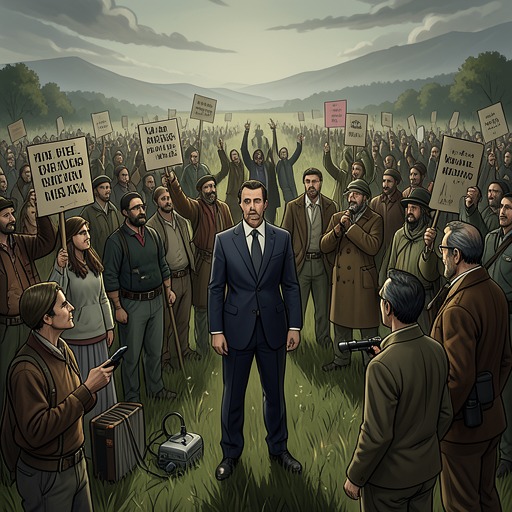
The hearing took place before Judge Pamela Baschab, who had replaced Judge R. E. L. Key after his retirement. She told Stevenson she intended to grant the motion immediately and wanted no extended argument. The courtroom looked different from the place where Walter had been tried: there was no metal detector and no menacing dog. Family members and supporters filled the room, television cameras and journalists crowded in, and more people waited outside than could get inside.
Walter entered in the black suit and white shirt Stevenson had brought him. He was not handcuffed or shackled. His family had seen him in a white prison uniform since the trial six years earlier, and some people gasped at the sight of him dressed for release. This time, deputies allowed the crowd's spontaneous cheers to pass without the threats of expulsion that had marked earlier proceedings. The contrast was not only between prison clothing and a suit, or between silence and celebration. It showed how the same courthouse could enforce a man's confinement and then, briefly, make room for the people who had come to welcome him.
Stevenson summarized the case and told the judge that both the defense and the State sought dismissal of all charges. The judge granted the motion. Instead of feeling only relief, Stevenson found himself angry: the court and prosecutor were now accommodating, but Walter had endured years of suffering before this point. He thought of the jury's original recommendation of life imprisonment without parole, which Judge Key had overridden to impose a death sentence. That decision had brought Walter's case to the lawyers' attention; without it, Stevenson feared, Walter might have spent his life in prison and died there.
Before the hearing ended, Stevenson told the court that it had been far too easy to convict Walter and send him to death row for a crime he had not committed, and far too hard to win his freedom after proving his innocence. The court then pronounced Walter free to go. His release was therefore not presented as a tidy conclusion: the order ended his confinement, while Stevenson's final words insisted that the system that caused it remained in need of change.
The journey out
Walter hugged Stevenson, who gave him a handkerchief for his tears, and shook hands with Chapman. They left by a back staircase, where reporters were waiting. Stevenson cut short the press questions when Walter seemed overwhelmed, and they walked to the courthouse entrance. Outside, dozens of people cheered and waved signs. Relatives ran to hug Walter; his grandchildren took his hands, and older community members came forward to embrace him. Even men who approached to shake his hand received a hug. It took nearly an hour to get through the crowd and into the car.
The journey continued to Holman Prison, because Stevenson and his colleague Bernard were taking Walter there before going to the family home. Walter told Stevenson that the men on death row had held a special service for him on his last night, praying for him and giving him their final hugs. He felt guilty about leaving them behind. Stevenson told him they were glad he was going home; Walter's freedom, he said, offered a small sign of hope in a place marked by hopelessness. The crowd followed them to the prison, and the guard at the gate allowed the caravan of media, relatives, and well-wishers inside. As Walter walked away, men shouted encouragement from their cells. One of the last voices called, “Stay strong, man. Stay strong!” Walter answered, “All right!”
Then he raised his arms and moved them gently up and down, as if preparing to take flight. He looked at Stevenson and said, “I feel like a bird, I feel like a bird.” The gesture made freedom physical: not an abstract legal status, but the first movement of a man leaving the place that had held him. Yet he had turned back toward the men who remained inside, and their voices had followed him to the car.
What release could not repair
The dismissal ended Walter's imprisonment but did not resolve the murder that had put him at the center of the case. After the release, Stevenson reflected that no one was ever prosecuted for Ronda Morrison's murder and considered the continuing anguish this must have caused her parents. The case's resolution freed an innocent man; it did not answer every question left by the crime or undo the harm to everyone caught in its aftermath.
Stevenson later described Walter's lesson in terms of mercy grounded in hope. Walter forgave people who had unfairly accused and convicted him, and those who had judged him unworthy of mercy. In this account, forgiveness did not mean that the injustice was insignificant or that dismissal alone was enough. It marked a possibility beyond punishment: that a person could recover a life worth celebrating, and that compassion could be extended even to those who had not earned it.
The release also sharpened the book's wider concern with the difference between condemning and helping. The crowd's joy, Minnie's uncertainty, the voices from the prison cells, and Stevenson's anger all remain present in the same event. Walter left as a free man, but his freedom did not make the people still inside disappear. His release offered hope precisely because it was real—and because it revealed how much work remained.